


News & Resources
Australia’s business travel market: A conversation with Matt Masson
Business travel remains an important part of how Australian organisations build relationships, connect with customers and pursue opportunities across Asia-Pacific. But with ongoing cost pressures, geopolitical uncertainty and changing traveller expectations, businesses are taking a closer look at the purpose and value of each journey.
From earlier booking and greater attention to itinerary quality to developments in airline distribution, the Australian market is adapting to changing conditions.
Following his contribution to our Global Business Travel Review 11.0, we caught up with Matt Masson, CEO of CT Partners, to share more of his perspective on what CT Partners and its members are seeing across Australia, how corporate priorities are changing and the opportunities ahead.

How would you characterise business travel demand during the first half of 2026?
Business travel demand in the first half of 2026 has been resilient, measured and increasingly strategic.
Across the Australian market, organisations are continuing to travel where there is a clear commercial purpose, particularly for client engagement, supplier relationships, major events and activity linked to growth across Asia-Pacific.
Travel remains essential, but every trip is being assessed more carefully for value, productivity and risk.
What changes have you observed in traveller behaviour, booking patterns and customer priorities?
Traveller behaviour has become more deliberate. Booking patterns are shifting towards earlier planning, stronger policy compliance and a greater focus on itinerary quality.
There is also a stronger preference for direct services where possible, because businesses are placing more value on traveller wellbeing and productive time.
The 'bleisure' trend continues as corporate travellers take advantage of company-funded airfares, staying for extra nights or visiting additional destinations before or after their business trips.
From a meetings, incentives, conferences and exhibitions (MICE) perspective, the business content of these trips is also becoming increasingly important.
Michael Walker, DIRECTIONS Conference and Incentive Management, explains:
"From a MICE perspective, we're seeing far less of the junket trips they used to be - the business content on these trips is now very important. The destination needs to deliver ROI in terms of business outcomes, but at the same time our groups still want the luxury and those exceptional experiences. Budgets have been stretched by the economy, and the Middle East situation has created additional expense on top of that. Balancing that experience against the budget our clients have got has been tricky, and is likely to stay tricky for at least another year."
Distribution and booking behaviour have also evolved. Airlines accelerated NDC maturity and pricing differentiation, led by Qantas, Singapore Airlines and Qatar Airways.
This is paragraph text. Click it or hit the Manage Text button to change the font, color, size, format, and more. To set up site-wide paragraph and title styles, go to Site Theme.

More corporate booking tools began supporting NDC content by default, with Qantas domestic bookings marking the most notable shift in Australia, increasing reliance on TMC and technology integrations to ensure access to full content.
Are customers travelling differently, becoming more cautious, or adapting to disruption as part of everyday business?
Customers are travelling differently, but not necessarily less. They are travelling with more intent.
Internal trips are being scrutinised more closely, while revenue-generating travel, relationship management, conferences, training and multi-purpose trips are being prioritised.
Many businesses are consolidating several objectives into one journey so they can maximise the return on airfare and accommodation spend.
At the same time, disruption is now seen as part of the operating environment, so customers are becoming more adaptable while also seeking stronger expert support.
Have recent events strengthened collaboration between TMCs, suppliers and corporate customers?
Yes. Recent events in the Middle East have strengthened collaboration between travel management companies, suppliers and corporate customers.
The industry has had to work more closely on availability, pricing, re-accommodation, traveller safety and communication.
That collaboration is particularly important in a market where capacity has improved, but cost pressure, geopolitical uncertainty and operational disruption remain real considerations.
Gary Reichenberg, Founder of Connections Travel Group, shares his experience:
"We're an industry that's susceptible to ups and downs - we've all witnessed what's going on in the Middle East recently. Having a community has helped us. Our relationship with the airlines and suppliers is second to none, and that's helped us in good stead."
Alan Wolf, Bay Corporate Travel, adds:
"It's an opportunity, in times like this with the Middle East, to reinforce the value of using travel professionals, very much more so than before, because people are actually realising what it's like to get stuck."
Are organisations seeking greater support, flexibility and reassurance than in previous years?
Organisations are seeking greater flexibility and reassurance than in previous years.
They want confidence that their travel programme can respond quickly, that their travellers are supported, and that spend is being managed responsibly.
Flexibility is no longer only about fare rules; it extends to policy settings, supplier choice, reporting, duty of care and the ability to make informed decisions in real time.
Our members are seeking to improve their technology solutions to offer improved reporting insights to corporate clients.
What opportunities and challenges will shape business travel in Australia over the next 12 months?
The next 12 months will be shaped by continued growth in Asia-Pacific travel, ongoing pressure on air and hotel costs, and the need for smarter use of technology and data.
For Australian businesses, the opportunity lies in using travel more strategically: connecting with customers, deepening supplier relationships and accessing growth markets across Asia.
The challenge will be doing so while managing cost, traveller wellbeing, sustainability expectations, border requirements and the operational complexity that now comes with moving people across regions.
Russell Amaral, Managing Director of World Business Travel, comments on the growing role of AI:
"Everybody's a travel agent now, so everyone's looking at AI. It helps us draft communications more easily and professionally, but it doesn't replace the skill and judgement of a real travel agent."
Australian aviation: NDC adoption and potential new competition
Qantas continues to push forward with its NDC rollout, having reached TMC adoption of approximately 25% on domestic flights in the previous 12 months.
However, NDC adoption has not gained as much traction across its short-haul and long-haul international route network due to gaps in technology and servicing delays.
This is an area we expect to see Qantas invest in further, particularly ahead of its planned Project Sunrise launch in 2027.
It has been a tale of two airlines, Qantas/Jetstar Group and Virgin Australia, in the domestic market over the past two years, since Rex Airlines withdrew from flying on the main trunk routes in mid-2024.
There are some early signs that a market shake-up may occur, with Vietnamese low-cost carrier VietJet targeting domestic Australia as part of an ambitious global growth strategy.
Already flying between Vietnam and Sydney, Melbourne and Brisbane, VietJet could, subject to regulatory approval, start flying domestically as early as October 2026.
With nearly 400 aircraft on order, this could translate to lower capital costs and give VietJet a strong start, potentially resulting in a reduction in domestic airfares after two years of steady price increases.
What might the rest of the industry learn from the trends emerging in Australia?
The broader industry can learn from the Australian market's pragmatic approach.
Businesses here are not treating travel as a discretionary expense, but as a strategic investment that must be planned well, supported properly and measured against clear outcomes.
The best TMCs in Australia are those that combine human expertise, strong supplier relationships and smart technology and AI solutions to deliver better traveller experiences and commercial results.
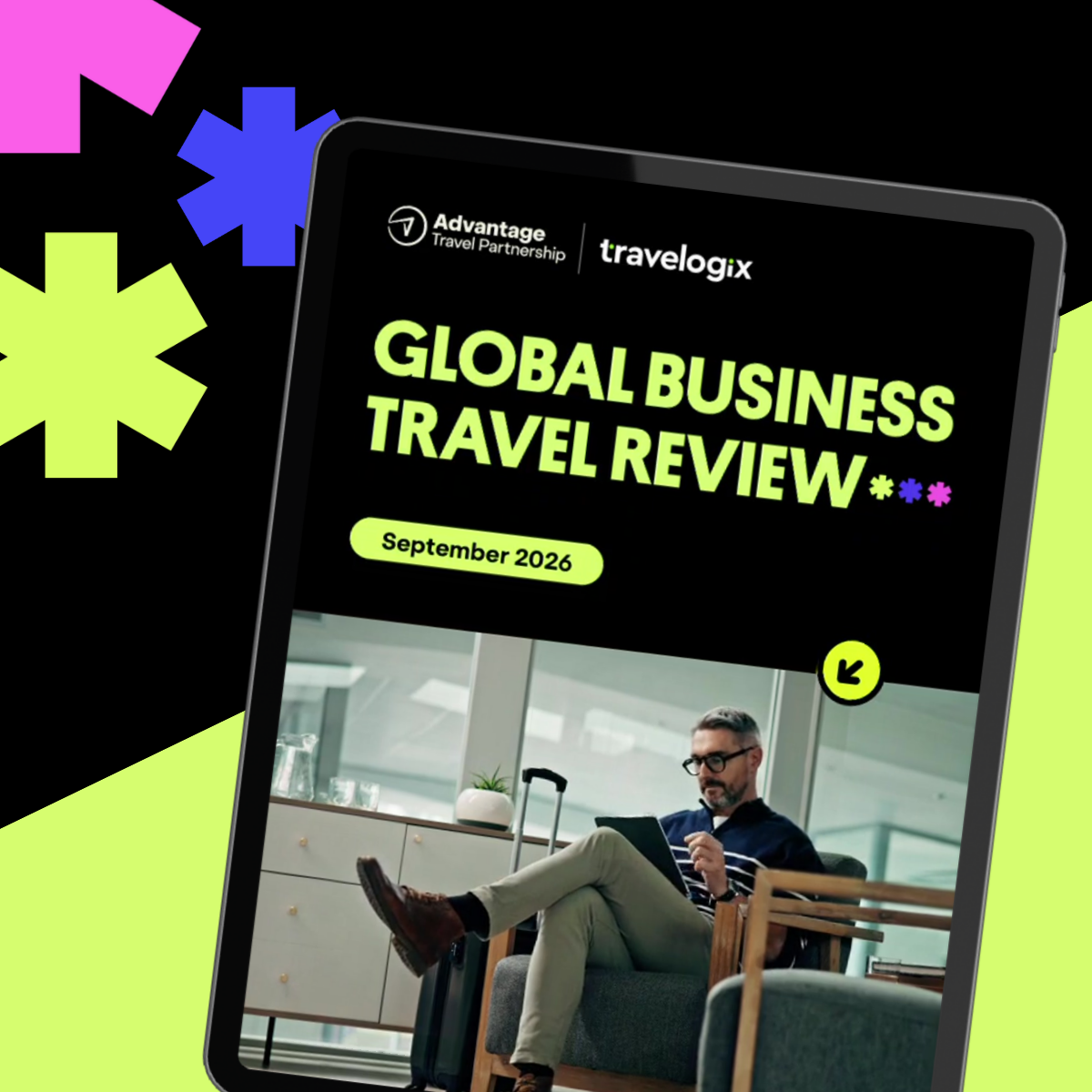
For more perspectives from across our global community, alongside data and expert analysis on the changing business travel landscape, explore the Global Business Travel Review 11.0.
Share article